



For years, cyber risk quantification (CRQ) has been associated with one primary objective: helping security leaders translate cyber risk into financial terms for executives and boards.
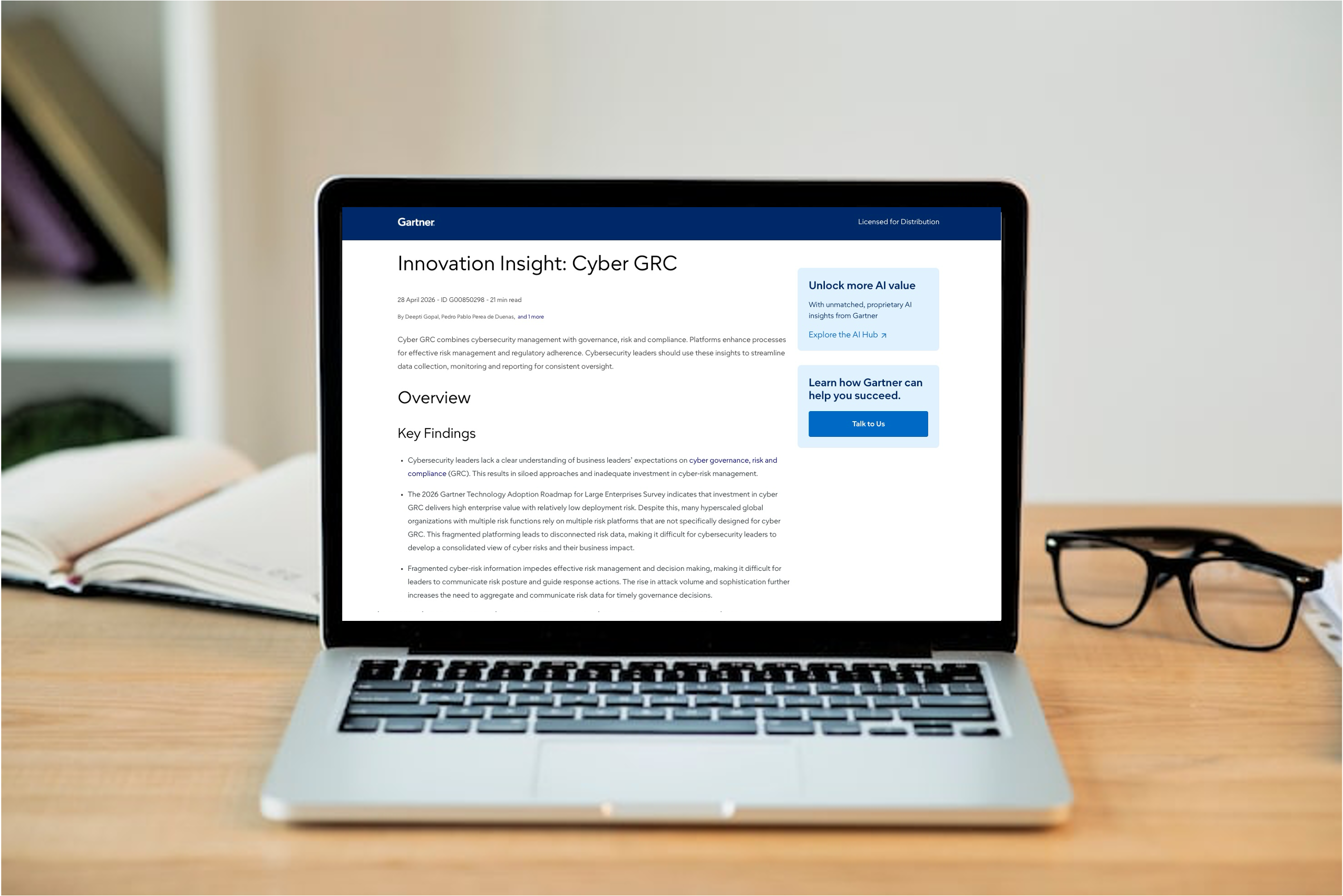
But according to Gartner's recent Innovation Insight for Cyber Risk Quantification, the role of CRQ is changing. Organizations are increasingly looking beyond periodic financial reporting and toward using quantified risk as a practical tool for day-to-day decision-making.
The question is no longer whether cyber risks can be quantified. The question is whether those quantified insights are credible enough to drive action and influence operations.
The Challenge: Static Risk Models in a Dynamic Threat Environment
Many organizations have invested significant effort into developing cyber risk models. Yet a common challenge persists: risk calculations can quickly become outdated as attack surfaces change, new vulnerabilities emerge, and business environments evolve. When quantified outputs are based on assumptions that are no longer aligned with reality, organizations risk making decisions with incomplete or inaccurate information.
According to Gartner, operational credibility is one of the biggest challenges organizations face when implementing CRQ. Quantified outputs often become disconnected from changing exposure conditions, attack paths, and control effectiveness. Without continuous validation, cyber risk numbers can become little more than another reporting exercise.
Why Operational Evidence Matters
Security leaders need more than a static estimate of potential loss. They need confidence that quantified risk reflects the organization's current security posture. Gartner highlights several capabilities that are helping organizations move CRQ from financial analysis to operational decision support. This include:
-
Exposure validation
-
Attack path analysis
-
Threat-informed testing
-
Continuously refreshed operational evidence
These inputs help ensure cyber risk calculations remain relevant as conditions change. When organizations combine quantified risk models with real-world evidence, they can make more informed decisions about what to prioritize, where to invest, and which risks are acceptable.
Moving From Measurement to Action
Effective cyber risk quantification should support four critical security decisions.
1. Prioritization
Not every vulnerability or exposure presents the same level of business risk. Quantification helps organizations identify which issues have the greatest potential impact.
2. Investment Planning
Security teams can evaluate investments based on expected risk reduction rather than relying solely on maturity goals or subjective preferences.
3. Risk Acceptance
Organizations can better understand trade-offs, uncertainty ranges, and potential business outcomes before accepting risk.
4. Control Remediation
Quantification helps teams focus remediation efforts on the gaps most likely to influence business loss.
These are the decisions executives care about most, and they require more than qualitative assessments or traditional risk heat maps.
The Future of CRQ Is Continuous
As cyber threats continue to evolve, organizations need cyber risk programs that evolve with them. The future of CRQ lies in continuously incorporating operational evidence into risk analysis, helping leaders move from annual or quarterly assessments to more dynamic, evidence-based decision support. Organizations that can connect quantified risk directly to operational realities will be better positioned to prioritize resources, justify investments, and communicate risk in business terms.
How Cyber Quant Helps
Cyber Quant by Mastercard helps organizations quantify cyber risk in financial terms while incorporating continuously updated intelligence and operational evidence. By combining financial risk modeling with continuously refreshed threat intelligence from Recorded Future, Cyber Quant helps organizations evaluate cyber risk based on current threat activity, industry exposure, and geopolitical conditions. Organizations can quantify potential financial impact, assess the effectiveness of risk reduction strategies, and make more confident investment and remediation decisions using current operational evidence rather than static assumptions. This helps security and business leaders understand not only the potential business impact of cyber risk, but also how that risk is changing over time.
Read the Full Gartner Report
Want to learn how leading organizations are operationalizing cyber risk quantification and why Gartner believes the discipline is evolving toward decision support?
Read Gartner's Innovation Insight for Cyber Risk Quantification to explore the latest trends, adoption drivers, implementation considerations, and recommendations for security leaders.